Data Publishing
This page applies to all researchers who want to publish their data.
Motivation
In chemical research, we strive to share results with others, commonly through articles in renowned scientific journals. To be able to actually work with and build upon these results, the scientific community also requires the data that the results were based on.
Publishing and therefore sharing these chemistry research data in a FAIR manner adds value to the research results and enables discovery and reuse. For this purpose it is important to consider aspects such as rich metadata, provenance information, information on the license applied, persistent identifiers, data formats for analytical data, and machine-readable chemical structures.
To publish data is essential to ensure that findings are transparent and reproducible. Moreover, it prevents duplicate efforts to generate data; hence, data publishing is also a measure of (ecological) sustainability.
Benefits of data publishing
There are direct benefits for researchers who publish their data. A data publication in a research data repository increases your career recognition, enables new collaborations, and provides a citation advantage compared to an article without an associated and linked dataset.
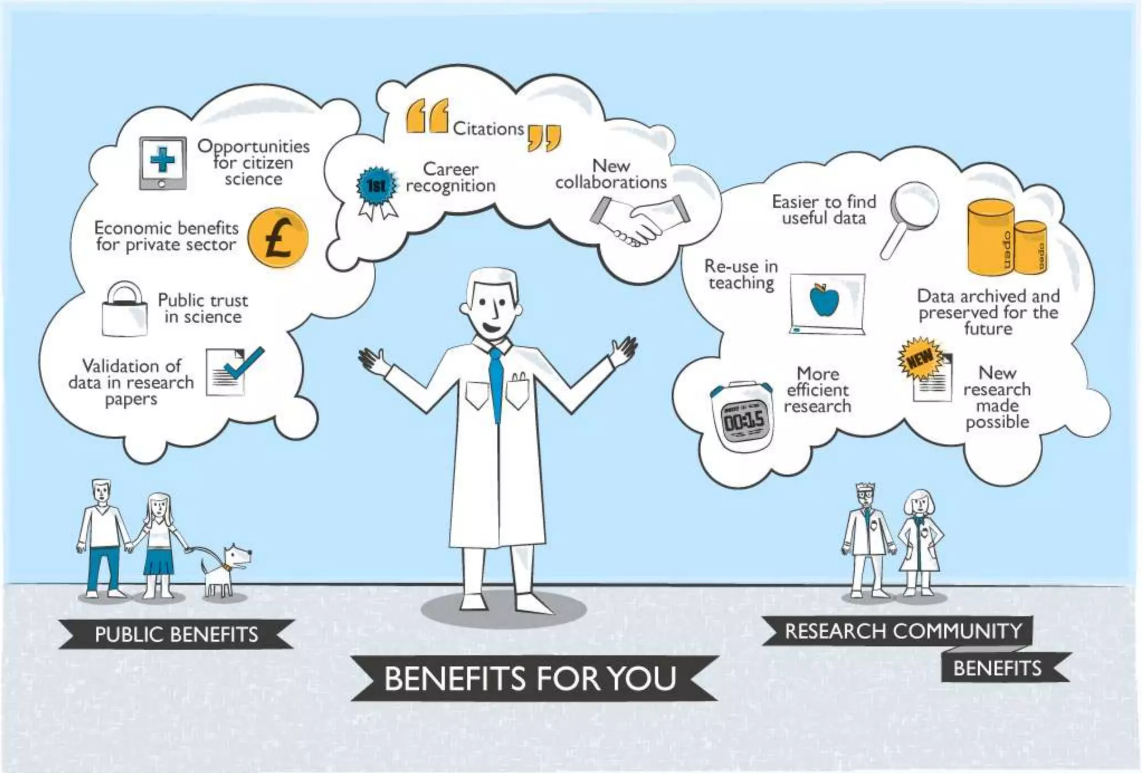
(Source: Brian Hole, CC BY 4.0, Slideshare)
Additionally, the research community benefits here, as new research is made possible and efficiency in research increases. Also the public sector can profit by enhanced public trust in science, since data publishing allows for the validation of research results. Nonetheless, the publication of data also brings an economic benefit, if the results can be reused by the private sector.
How to start
There are two main ways to publish research data:
- publish data in a research data repository
- publish a separate data article with the corresponding dataset published in a research data repository
Discipline-specific repositories should be the first choice, as these repositories enhance the FAIRness of data on behalf of the submitters. To retain the same level of FAIRness, data publishing in generic repositories requires manual FAIRification.
Smart Lab solutions, such as the Chemotion ELN, can offer built-in workflows to assist researchers in publishing data. If the data is already documented in a structured way in Chemotion ELN, then the data can also be published in this structured way via the Chemotion Repository.
Further information on repositories, including a list of recommended chemistry-friendly repositories, is provided on our pages on repositories and in the guide on how to choose the right repository.
A data availability statement in the back matter of a manuscript communicates how the data has been shared and how it can be accessed by others. Datasets and scientific publications should be interlinked using persistent identifiers.
Still confused about how to publish chemistry data? We do provide a consulting and data stewardship service via our Lead by Example project. Have a look at Lead by Example Datasets for inspiration!
Sources and further information
- The citation advantage of linking publications to research data
- NSF Public Access Plan 2.0
- DFG Code of Conduct, Guideline 13: Providing public access to research results
- How does Open Science practice differ between research disciplines?
Main authors: ORCID:0000-0002-6243-2840 and ORCID:0000-0003-4480-8661